Product Category
Safe Room Ventilation Reviews & Buying Guide
Independent reviews of ventilation and air supply systems for sealed safe rooms and underground shelters.
Independent reviews of ventilation and air supply systems for sealed safe rooms and underground shelters.
$1,800 – $2,600
Purpose-built for residential safe rooms. Maintains positive pressure with a quiet 45 dB fan. Simple plug-and-play installation with included ducting.
Read full review$800 – $1,400
Complete hand-crank ventilation kit. No electricity needed. Widely used in FEMA-compliant storm shelters. Optional NBC filter upgrade available.
Read full review$2,500 – $3,800
Powered HEPA filtration designed for basement and underground rooms. Higher airflow than hand-crank kits. Good step up from basic ventilation.
Read full reviewBuying Guide
The system must push filtered air into the room, creating overpressure that forces unfiltered air out through gaps rather than in. Without positive pressure, your sealed room isn't actually sealed — contaminated air leaks in through every crack.
Hand-crank blowers work without electricity — critical during power outages. Powered fans deliver more CFM with less effort but need backup power. The best setup: powered primary with a hand-crank backup.
Cubic feet per minute — the volume of air moved. Plan for 15-25 CFM per occupant minimum. A 4-person safe room needs at least 60-100 CFM. Undersizing leads to dangerous CO2 buildup within hours.
Basic particulate filters handle dust and debris (storm shelters). HEPA filters capture 99.97% of particles including smoke and fallout. For chemical/biological protection, you need full NBC — see our air filtration reviews.
Critical for extended stays. Powered systems range from 40 dB (quiet library) to 65 dB (normal conversation). Below 50 dB is comfortable for multi-hour shelter. Above 55 dB gets fatiguing fast, especially for children.
Some kits are DIY-friendly with pre-cut ducting and plug-in blowers. Others require core drilling through concrete and HVAC professional installation. Factor installation cost ($200-$800) into your budget.
In-Depth Reviews
$1,800 – $2,600
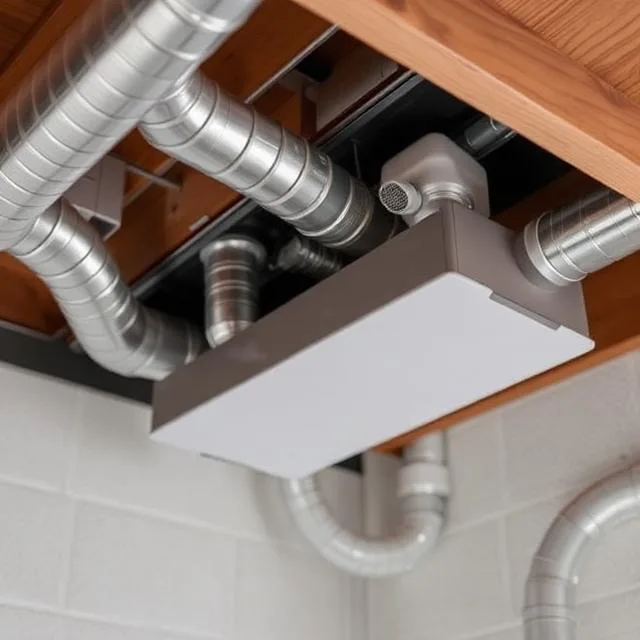
Safe Cell is one of the few manufacturers that builds ventilation systems specifically for residential safe rooms — not adapted from commercial HVAC or industrial applications. The DERA kit includes a blower unit, intake and exhaust ducting, blast-resistant intake ports, and a basic particulate filter (HEPA upgrade available). The fan runs at 45 dB — roughly the noise level of a quiet office — making it comfortable for extended shelter stays with children. Installation is straightforward: two core holes through the wall, mount the unit, connect the ducting. Most installers complete it in under 4 hours.
Build
8.4
Protection
8.6
Value
8.4
Features
8.6
Warranty
8.2
$800 – $1,400
American Safe Room's ventilation kit is the go-to choice for FEMA-compliant storm shelters, and for good reason. At $800-$1,400, it's the most affordable complete ventilation system in our review, and the hand-crank blower means zero dependence on electricity. The kit includes a hand-crank centrifugal blower, intake and exhaust pipes with blast-resistant caps, a basic particulate filter, and all necessary mounting hardware. An NBC filter upgrade is available for an additional $300-$500. The 60 CFM output is adequate for 3-4 occupants in a sealed room — enough for most closet-conversion and small safe rooms.
Build
7.8
Protection
8.0
Value
9.2
Features
7.4
Warranty
8.0
$2,500 – $3,800
Castellex is best known for their full NBC filtration systems, but the Air350 is their HEPA-only model — positioned as a step up from basic ventilation without the cost of a full NBC system. It delivers 350 m³/h (about 206 CFM) of HEPA-filtered air, making it the highest-capacity system in our ventilation review. The HEPA H13 filter captures 99.95% of particles at 0.3 microns, including smoke, dust, and radioactive fallout particles. This is the right choice for underground rooms where natural ventilation is zero and you need powered airflow with meaningful filtration.
Build
8.6
Protection
8.4
Value
7.8
Features
8.4
Warranty
8.2
| System | Score | Price | Power | Filtration | CFM | Noise |
|---|---|---|---|---|---|---|
| Safe Cell DERA Kit Our Pick | 8.5 | $1,800–$2,600 | 120V | Particulate (HEPA opt.) | 100 | 45 dB |
| Castellex Air350 | 8.3 | $2,500–$3,800 | 240V | HEPA H13 | 206 | 50 dB |
| American Safe Room Kit | 8.0 | $800–$1,400 | Hand-crank | Particulate (NBC opt.) | 60 | Manual |
| Radius Engineering Vent Kit | 7.6 | $1,200–$1,800 | 120V | Particulate | 80 | 55 dB |
| DIY Safe Room Supply Kit | 7.2 | $500–$900 | Hand-crank | Particulate | 40 | Manual |
In a typical 8x10 foot sealed room with 4 occupants, CO2 levels reach dangerous concentrations (above 5%) within 2-4 hours. You'll start feeling symptoms — headache, dizziness, shortness of breath — well before that. Ventilation isn't optional for any shelter stay beyond about 1 hour. Even a basic hand-crank system extends safe occupancy time indefinitely.
A gap under the door provides some passive air exchange, but it defeats the purpose of a sealed room — contaminated air, smoke, and debris enter through that same gap. A proper safe room should be sealed with a ventilation system providing controlled, filtered airflow. The gap gives you air but zero protection.
No. Bathroom exhaust fans extract air — they create negative pressure, which pulls unfiltered outside air in through every gap. Safe room ventilation must create positive pressure (pushing air outward). You need a supply-air system with filtered intake, not an exhaust system. Purpose-built safe room ventilation kits start at $500 and are designed for exactly this application.
Ventilation provides fresh air to a sealed room — it solves the CO2 problem. Basic ventilation kits include particulate filters for dust and debris. NBC filtration is ventilation plus advanced chemical and biological protection using activated carbon and military-grade filter media. If your safe room is for storms and home security, basic ventilation with a particulate or HEPA filter is sufficient. If you want protection against chemical or biological threats, you need NBC. See our NBC air filtration reviews for that category.
Summit Safe Rooms earns a commission when you purchase through our links. This doesn't affect our ratings or editorial independence. All prices are approximate and may vary. Last updated March 2026.