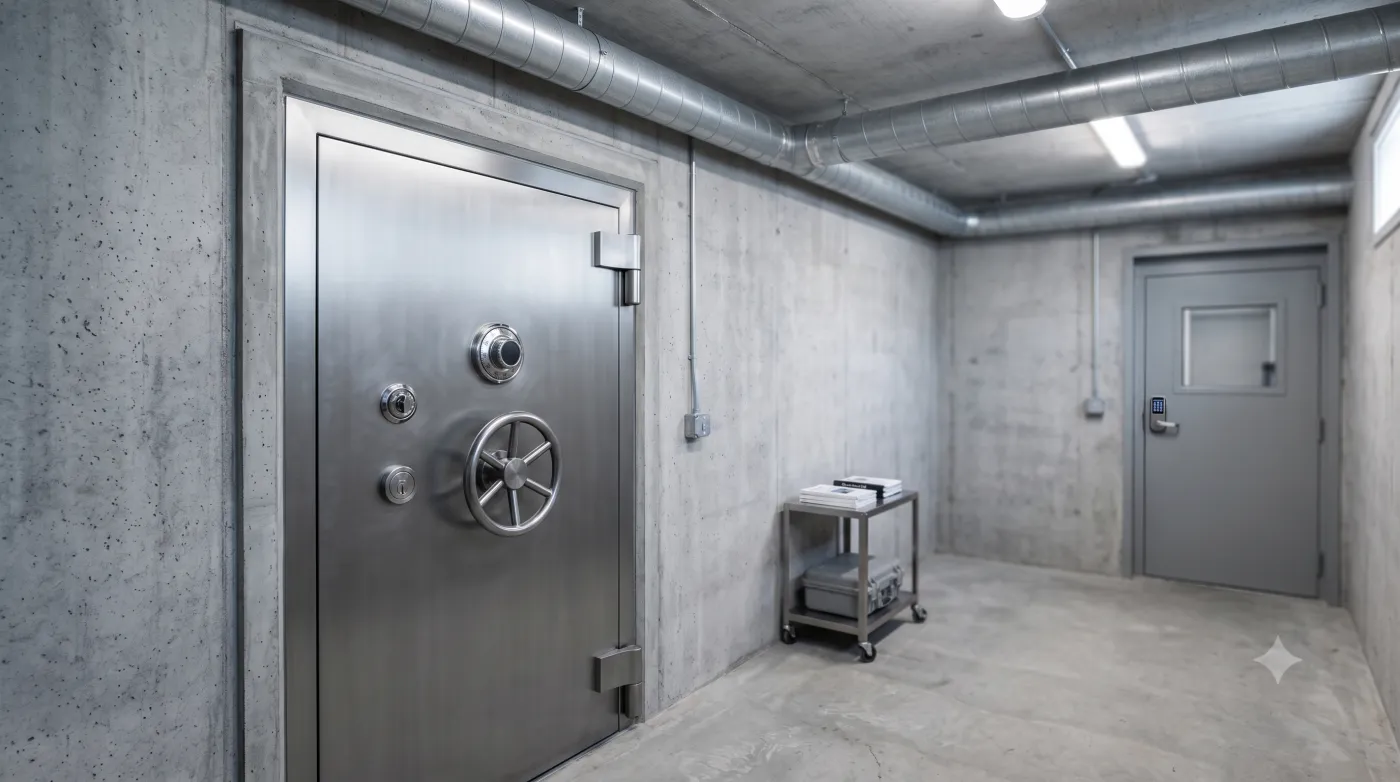
Anchor Review
Updated June 2026 · 22 min read
The Best Vault Doors of 2026
We researched and compared 8 residential vault doors across 5 scoring categories. Here are our top picks for every budget and security level.
We researched and compared 8 residential vault doors across 5 scoring categories. Here are our top picks for every budget and security level.
Our top pick is the Fort Knox Defender 6637 (Summit Score: 9.2) — it offers the best combination of build quality, protection, and warranty in the residential vault door market. If budget is a concern, the Liberty Vault Door (8.4) delivers excellent protection at roughly half the price. For oversized or custom openings, the Vault Pro USA Titan (8.7) is the best option available.
How we chose these products
We evaluated each vault door using our Summit Score methodology — a weighted rating across Build Quality (25%), Protection Rating (25%), Value (20%), Features (15%), and Warranty & Support (15%). We researched manufacturer specs, dealer feedback, owner reviews, and consulted with installers and security professionals. We do not accept payment for reviews or allow manufacturers to influence our ratings.
A vault door is the single most important component of any residential safe room or gun vault. You can pour concrete walls eight inches thick and install a state-of-the-art air filtration system, but if your door can be defeated in under five minutes, the rest of your investment is worthless.
The problem: most homeowners treat the vault door as an afterthought, choosing based on aesthetics or price alone. The differences between a $2,000 vault door and a $5,000 vault door are not obvious from a product photo — they're in the steel gauge, the lock mechanism, the hinge engineering, the fire lining thickness, and the warranty terms that define what happens when something goes wrong.
We spent over 60 hours researching, comparing, and evaluating 8 residential vault doors from the top manufacturers. We spoke with dealers, installers, and owners. We compared spec sheets line by line. This guide distills everything we learned into clear recommendations for every budget and use case.
$4,200 – $5,800
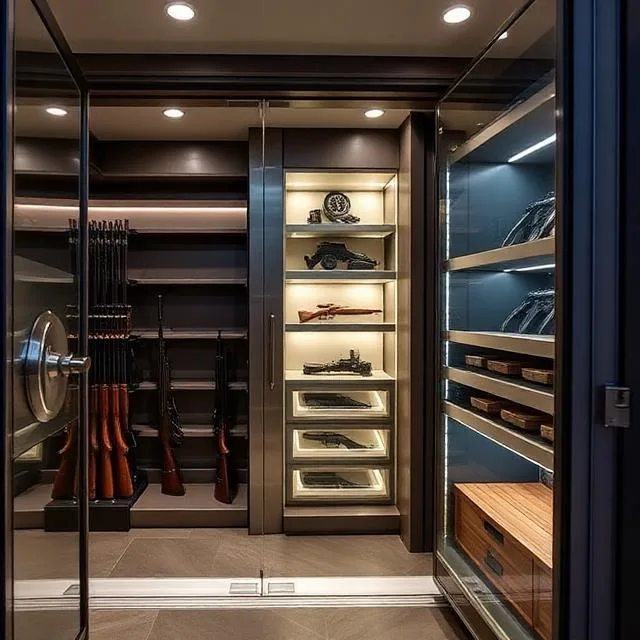
Fort Knox has been manufacturing vault doors in Orem, Utah since 1997. The Defender 6637 is their flagship residential model, and it remains the benchmark against which we measure every other door in this category.
The build quality is immediately apparent. The body is 10-gauge A36 steel — the thickest in our review. Fort Knox uses a proprietary gear-driven hinge system (they call it "Gear Drive") that eliminates the play and sag you see in conventional ball-bearing hinges. After years of daily use, these hinges maintain their alignment. This matters more than most buyers realize: a sagging door is a door that doesn't seal properly against fire.
Security features are equally impressive. Four-inch military-style locking bars engage on all four sides of the door frame — top, bottom, left, and right. Most competitors only lock on three sides. The standard lock is a Sargent & Greenleaf mechanical dial, with an electronic keypad as an option. Both are UL-listed.
The fire protection uses multiple layers of fire board and ceramic fiber, rated for 2 hours at 1,200°F. The expandable door seal activates in the first minutes of a fire, creating an airtight barrier against smoke and heat.
Where Fort Knox truly separates itself is the warranty. Every Defender door carries a lifetime warranty on the body and mechanism, plus a break-in warranty: if anyone breaches the door, Fort Knox replaces it and covers the contents. No other manufacturer in our review offers this.
Build
9.6
Protection
9.5
Value
8.2
Features
9.2
Warranty
9.8
The Fort Knox Defender 6637 is the best residential vault door you can buy. It leads in build quality, security features, and warranty coverage. The price is premium, but you're buying a door that will outlast your house and protect its contents against both break-in attempts and fire. If budget allows, this is the door we recommend.
$2,400 – $3,200
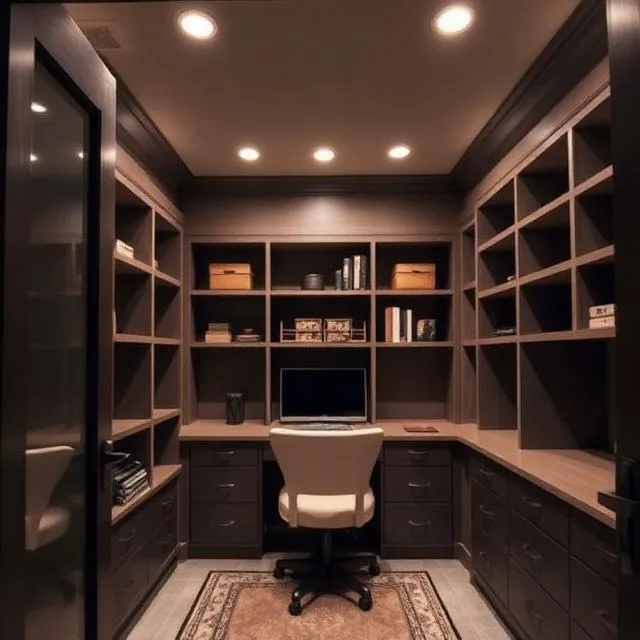
Liberty is one of the largest safe manufacturers in the United States, and that manufacturing scale translates directly into the best price-to-protection ratio in our review. At $2,400-$3,200, the Liberty vault door delivers meaningful security at roughly half the price of our top pick.
The 11-gauge steel body is slightly thinner than the Fort Knox's 10-gauge, but the fire protection is actually superior: Liberty rates their vault door at 2.5 hours at 1,200°F, compared to Fort Knox's 2 hours. The door uses 14 locking bolts — more than any other door in our review — creating a formidable barrier around the entire frame perimeter.
The trade-offs are real but proportional to the savings. You're getting standard ball-bearing hinges instead of gear-driven. The lock options are more limited. The finish quality, while perfectly acceptable, lacks the refinement of Fort Knox or Vault Pro. And the warranty, while lifetime on the body, does not include break-in coverage.
For most homeowners building their first vault room or converting a closet into a gun safe, the Liberty is the right answer. You get serious protection without a serious financial commitment — and the savings can go toward reinforcing the surrounding walls, which is often the more important investment.
Build
8.2
Protection
8.5
Value
9.4
Features
7.8
Warranty
8.2
The Liberty Vault Door is the best value in the residential vault door market. It delivers meaningful security and class-leading fire protection at a price point that's accessible for most homeowners. If you're not willing to spend $4,000+ on a Fort Knox, the Liberty is where the smart money goes.
$5,500 – $8,200
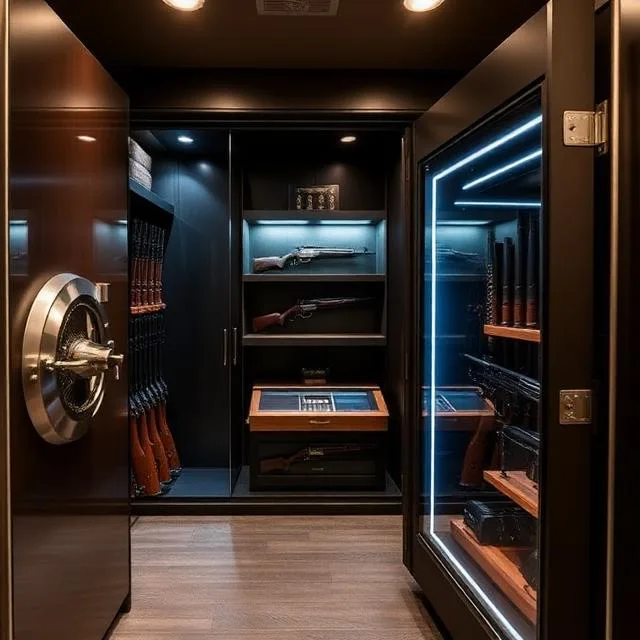
Most vault doors are built for a standard 36" x 80" opening. But many homeowners — particularly those building dedicated vault rooms or walk-in safe rooms — need something bigger. This is where Vault Pro USA owns the market.
The Titan is available in widths up to 48 inches and heights up to 84 inches, with a modular frame system that can accommodate non-standard wall thicknesses from 4 inches to 14 inches. This is the vault door for when you're building a serious room, not converting a closet.
The build quality matches the ambition. The 10-gauge steel body is comparable to Fort Knox. The 8 massive locking bolts — each over 1 inch in diameter — create an extremely rigid connection between door and frame. The door is built to order in the USA, with each unit custom-manufactured for the buyer's specific dimensions.
The downsides are predictable: this is the most expensive door in our review, and the custom manufacturing process means lead times of 12-16 weeks. The dealer network is smaller than Fort Knox or Liberty, which can complicate installation in some markets.
Build
9.2
Protection
9.0
Value
7.6
Features
9.0
Warranty
8.6
The Vault Pro USA Titan is the best vault door for oversized and custom openings. If you're building a dedicated vault room and need a door larger than 36 inches wide, this is the only option in our review that delivers premium build quality at non-standard dimensions. The price is high, but the engineering justifies it.
| Brand / Model | Score | Price | Steel | Fire | Bolts | Warranty |
|---|---|---|---|---|---|---|
| Fort Knox Defender 6637 Top Pick | 9.2 | $4,200–$5,800 | 10-ga | 2 hr | 4-side bars | Lifetime + Break-in |
| AMSEC VD8042 | 8.9 | $3,800–$5,200 | 10-ga | 2 hr | 10 bolts | Lifetime body |
| Vault Pro USA Titan | 8.7 | $5,500–$8,200 | 10-ga | 2 hr | 8 bolts | Lifetime |
| Browning Clamshell | 8.5 | $3,500–$4,800 | 10-ga | 1.5 hr | 18 bolts | Lifetime body |
| Liberty Vault Door | 8.4 | $2,400–$3,200 | 11-ga | 2.5 hr | 14 bolts | Lifetime body |
| Rhino Ironworks | 7.8 | $2,800–$3,600 | 11-ga | 1.5 hr | 12 bolts | Lifetime body |
| Smith Security Safes | 7.6 | $2,000–$3,000 | 11-ga | 1 hr | 10 bolts | 5-year |
| Pentagon Vault | 7.2 | $1,800–$2,600 | 12-ga | 1 hr | 8 bolts | 5-year |
Before you spend $2,000-$8,000 on a vault door, verify these seven specifications. Dealers don't always volunteer this information, and the differences between a good vault door and a great one are hidden in the details.
1. Steel Gauge
Look for 10-gauge steel (0.1345" thick) on the door body. This is the standard for premium vault doors and is nearly twice as strong as 12-gauge. 12-gauge (0.1046") is the minimum you should accept — it's the threshold for UL Residential Security Container (RSC) certification. Anything thinner than 12-gauge is decorative, not protective.
2. Locking Bolt Configuration
Count the locking bolts and check which sides they engage. A door with 14 bolts on three sides is more secure than a door with 8 bolts on two sides — but 4-inch locking bars on all four sides (like the Fort Knox Defender) may be stronger than either. Ask whether the bolts are active (motorized) or dead (fixed), as dead bolts on the hinge side add protection even if the lock is defeated.
3. Fire Rating & Test Standard
A legitimate fire rating is tested under UL 72 standards using the ASTM E-119 time-temperature curve, which simulates a real structure fire reaching up to 2,000°F. The door must keep interior temperatures below 350°F for the rated duration. Ask the manufacturer which standard they used — some brands claim fire ratings based on internal testing rather than independent UL testing. A 2-hour UL-tested rating is worth more than a 4-hour self-certified one.
4. Hinge System
Standard ball-bearing hinges work fine initially but can develop play after years of supporting 400-800 pounds. Gear-driven hinges (used by Fort Knox) maintain alignment indefinitely because the gears prevent vertical sag. This isn't just about convenience — a sagging door creates gaps in the fire seal. Ask whether the hinges are internal (harder to attack) or external.
5. Lock Type & UL Listing
Insist on a UL-listed lock. For mechanical, look for Sargent & Greenleaf Group II or equivalent — these are the industry standard for vault-grade security. For electronic keypads, verify they carry a UL Type 1 rating. Mechanical locks have no batteries and no failure mode in a power outage. Electronic locks open faster and support multiple user codes. Many security professionals recommend mechanical for the primary lock with an electronic option as secondary.
6. Swing Direction
Outswing vault doors are more secure — the door face sits against the frame, and the locking bolts engage behind the frame, making pry attacks extremely difficult. Inswing doors are easier to conceal behind a false wall, bookshelf, or hidden panel but sacrifice some pry resistance. Choose outswing for maximum security and inswing only if concealment is a primary design goal. Read our gun vault room design guide for layout considerations.
7. Warranty — Read the Fine Print
A "lifetime warranty" on a vault door can mean very different things. Some cover only the door body. Some cover the lock and mechanism. Very few cover the contents if the door is breached — Fort Knox's break-in warranty is the standout here. Check whether the warranty requires professional installation (most do), whether it transfers to a new homeowner if you sell the house, and whether it covers fire damage or only burglary. A vault door is a decades-long investment, and the warranty terms matter more than the marketing language.
For a deeper dive into door selection, including how to match a door to your wall construction, read our complete safe room door buying guide.
Budget at least $2,000-$3,000 for a quality vault door that provides real security. Below that range, you're getting decorative-grade products that won't withstand serious attack. For premium protection with a break-in warranty, expect $4,000-$6,000. For custom or oversized doors, $5,000-$8,000+. A good rule of thumb: your vault door should cost at least 15-20% of the total vault room project budget.
Technically possible but strongly discouraged. Vault doors weigh 400-800 pounds and must be perfectly plumb and level to function correctly. Improper installation can void your warranty, damage the lock mechanism, and create a fire seal that doesn't work. Most manufacturers require or strongly recommend professional installation. Budget $500-$1,000 for installation.
They serve different purposes. Vault doors are optimized for preventing unauthorized entry and fire protection — they're ideal for gun rooms, document storage, and valuables. Ballistic doors are rated against projectile impact and are designed for safe rooms where the primary threat is an armed intruder. Some homeowners use both: a ballistic door on the safe room and a vault door on the gun vault within. Read our ballistic door reviews for more.
10-gauge steel (0.1345 inches thick) is the gold standard for residential vault doors. It's nearly twice as strong as 12-gauge (0.1046 inches) and provides meaningful resistance against cutting tools, pry bars, and drilling. 12-gauge is the absolute minimum — it's the threshold for UL Residential Security Container (RSC) certification. Anything thinner than 12-gauge will not stop a determined attacker with basic tools. All three of our top-rated doors in this review use 10-gauge steel bodies.
A fire rating indicates how long the door can be exposed to fire while keeping the interior temperature below 350°F. Legitimate ratings are tested under the UL 72 standard using the ASTM E-119 time-temperature curve, which simulates a structure fire reaching up to 2,000°F. A "2-hour fire rating" means the door maintained safe interior temperatures for 2 full hours during this test. Important caveat: the fire rating only applies to the door itself. Your vault room's total fire protection also depends on the walls, ceiling, and how well the door's expandable seal performs. Some manufacturers use internal testing rather than independent UL testing — always ask which standard was used.
Outswing is more secure. The door face sits flush against the frame, and the locking bolts engage behind the frame — this makes pry attacks far more difficult because an attacker can't push the door inward. Inswing doors are easier to conceal behind a bookshelf, false wall, or hidden panel, which some homeowners prioritize. For maximum security, always choose outswing. If concealment is your design priority and you accept the trade-off in pry resistance, inswing can work — but reinforce the frame accordingly.
Residential vault doors typically weigh 400-800 pounds. Premium 10-gauge doors with fire lining are on the heavier end. On a concrete slab (basement or ground floor), weight is not a concern. On an upper floor with wood-frame construction, consult a structural engineer — you may need to sister joists or add support beneath the installation point. The weight is concentrated on the hinge side of the frame, so that's where structural reinforcement matters most. Budget $500-$1,000 for professional installation, which includes the equipment needed to safely move and hang the door.
Mechanical dial locks (like the Sargent & Greenleaf Group II) have no batteries, no electronics that can fail, and they'll work for decades with zero maintenance. Electronic keypads open faster — typically 3-5 seconds versus 15-30 seconds for a dial — and allow multiple user codes. Most security professionals recommend mechanical for a primary vault door because reliability in an emergency matters more than speed. If quick access is important (self-defense scenarios), consider a door with both: mechanical as the primary with an electronic bypass. Always verify that any electronic lock carries a UL Type 1 rating.
Summit Safe Rooms earns a commission when you purchase through our links. This doesn't affect our ratings or editorial independence. All prices are approximate and may vary by dealer and configuration. Product specifications are sourced from manufacturer data and dealer feedback. Last updated June 2026.