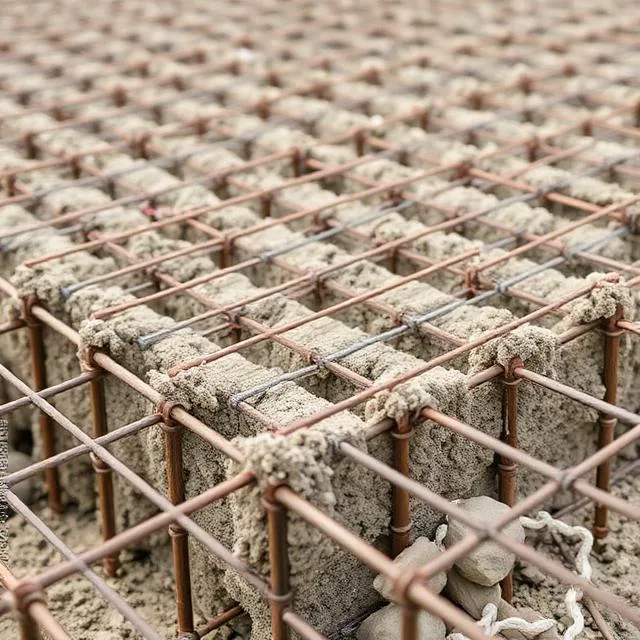
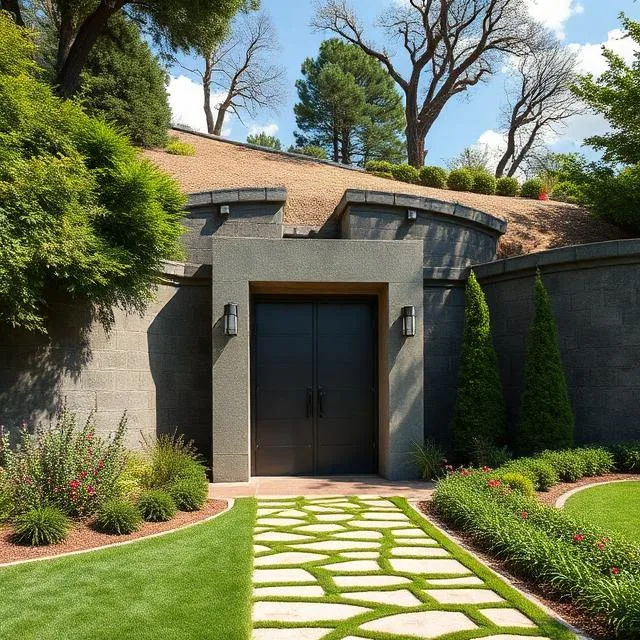
An independent comparison of the two primary materials for underground bunker construction — structural performance, cost, longevity, and maintenance.
When shopping for an underground bunker, the first major decision is the construction material: reinforced concrete or prefabricated steel. Both work. Both can protect your family. But they differ significantly in performance, lifespan, cost, and comfort.
As an independent editorial site, we have no financial stake in which material you choose. This guide presents a fair, data-driven comparison so you can make the right decision for your property and budget.
| Factor | Reinforced Concrete | Prefab Steel |
|---|---|---|
| Lifespan | 100+ years | 30–50 years |
| Corrosion | Does not rust | Rusts without coating maintenance |
| Thermal Performance | Excellent (thermal mass) | Poor (conducts heat/cold) |
| Fire Resistance | 4+ hour rating | Warps at 1,100°F |
| Customization | Any shape or size | Fixed modular sizes |
| Install Time | 4–8 weeks | 1–3 days (after excavation) |
| Upfront Cost | Higher ($120K–$500K+) | Lower ($50K–$200K) |
| Maintenance | Minimal | Regular rust prevention required |
| Blast Resistance | Superior | Good (varies by gauge) |
| Interior Comfort | Quieter, more stable temp | Can be noisy, temp swings |
Reinforced concrete is the material used in military bunkers, nuclear shelters, and high-security government facilities worldwide. Its strengths are longevity (100+ year lifespan), thermal mass (natural temperature regulation underground), fire resistance (4+ hours), and zero corrosion risk.
Concrete bunkers are poured on-site to your exact specifications — any shape, any size, with integrated mounting points for ventilation, electrical, and plumbing. The walls can be made thicker in areas requiring more protection and thinner where they don't.
The downsides: higher upfront cost, longer construction timeline (4-8 weeks of concrete work), and dependence on local concrete contractors with bunker experience. Site conditions (soil type, water table, access) heavily influence feasibility and cost.
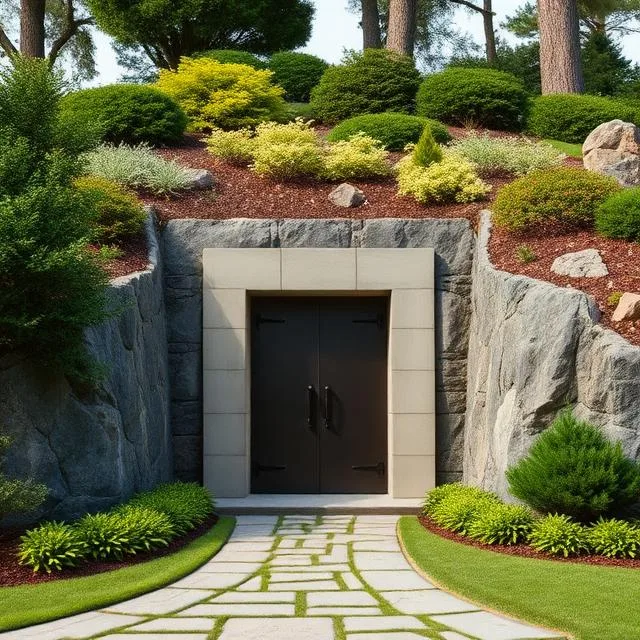
Prefabricated steel bunkers — corrugated steel pipes, Atlas-style containers, and modular steel rooms — offer a faster, more affordable path to underground shelter. They're manufactured off-site and delivered ready to bury. Once excavation is complete, a steel bunker can be installed and backfilled in 1-3 days.
The cost advantage is significant: a steel bunker typically runs 40-60% less than an equivalent concrete structure. For homeowners who want underground shelter without a six-figure investment, steel is the accessible option.
The trade-offs are real: steel corrodes underground without meticulous waterproofing and cathodic protection. Lifespan is 30-50 years versus 100+ for concrete. Steel conducts heat and cold, requiring insulation for comfort. And the fixed modular sizes limit customization — you're buying a standard product, not a custom build.
Choose concrete if: you're building a permanent, multi-generational shelter; you need custom dimensions; you want the best thermal and fire performance; or your budget supports the premium investment.
Choose steel if: you want underground shelter on a tighter budget; you need fast installation; you're okay with a 30-50 year lifespan; or you're installing on a property where you may not stay forever.
Neither choice is wrong. Both provide meaningful protection. The right answer depends on your budget, timeline, property conditions, and how long you plan to use the shelter.
Regardless of concrete or steel, every underground bunker needs a quality vault door, ventilation system, and potentially NBC air filtration. We've independently reviewed and rated the best products in each category.
Summit Safe Rooms is an independent editorial site. We are not a builder or manufacturer. This guide is informational and does not constitute construction advice. Consult a qualified contractor for your specific project.